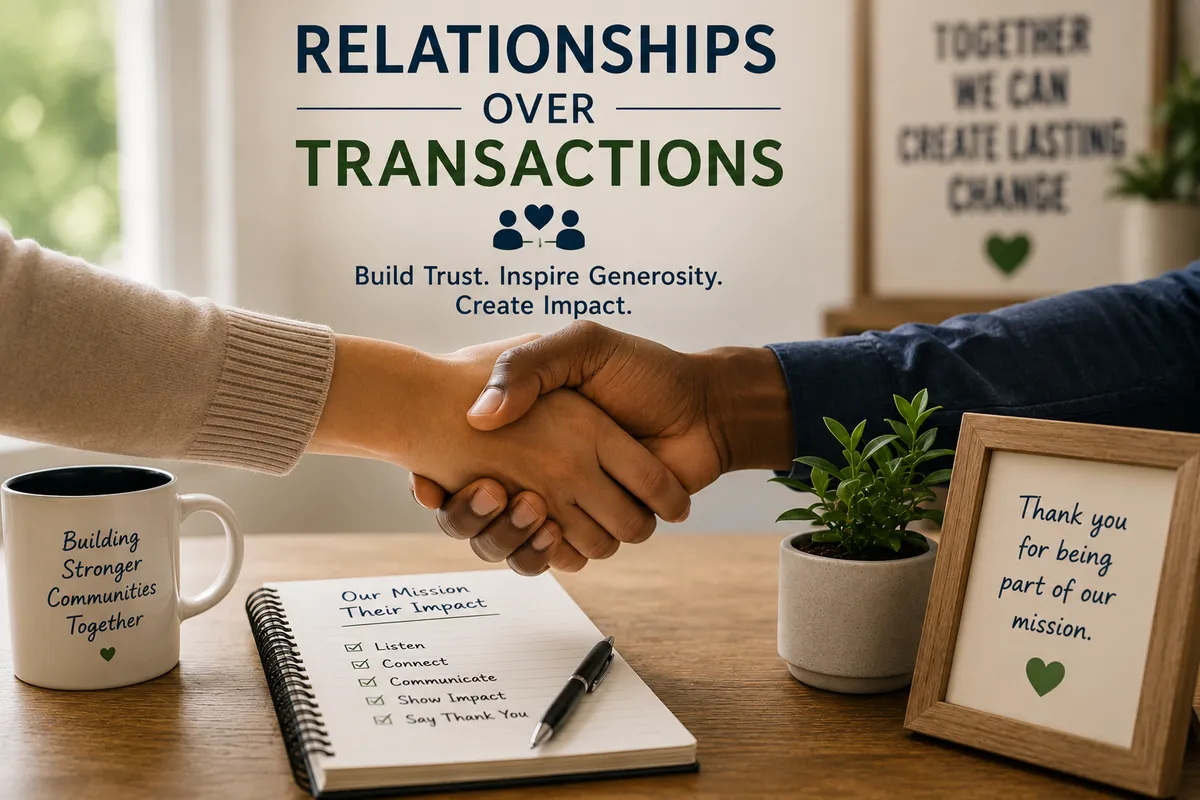
Stop Asking for Money: Start Building Relationships
Stop Asking for Money: Start Building Relationships
By Willie Finklin, CFRE, The Grant GOAT
If I could change one mindset in the nonprofit sector, it would be this:
Fundraising is not about asking for money.
It's about building relationships.
Too often, nonprofits approach fundraising like a transaction. They need money, so they send an appeal letter. They have an event coming up, so they ask people to buy tickets. They find a grant opportunity, so they submit an application. Then they wonder why donors don't respond or why supporters disappear after making one gift.
The truth is, people don't give because they were asked.
They give because they trust.
They give because they believe in the mission.
They give because they feel connected to the organization and know their contribution will make a difference.
When fundraising becomes nothing more than asking for money, relationships suffer. But when fundraising becomes an opportunity to build trust, educate supporters, and demonstrate impact, giving becomes a natural outcome.
Let's talk about why relationship-based fundraising is one of the most valuable investments your nonprofit can make.
1. Donors Are People, Not ATMs
One of the biggest mistakes nonprofits make is treating donors like funding sources instead of partners in the mission.
Think about what happens after someone makes a donation. Does your organization simply send a receipt and wait until the next campaign to reach out again? Unfortunately, that's exactly what many nonprofits do.
Imagine having a friend who only called when they needed something. Eventually, you'd stop answering the phone.
Donors are no different.
People want to feel valued, appreciated, and connected. They want to know their generosity matters beyond the transaction itself. A simple thank-you, an update about the program they supported, or a personal note explaining the impact of their gift can strengthen a relationship far more than another fundraising appeal.
When donors feel like partners instead of pocketbooks, they're much more likely to continue supporting your organization.
2. Trust Is Built Between Campaigns
Many nonprofit leaders believe fundraising begins when it's time to launch a campaign.
In reality, fundraising happens every day.
Every newsletter you send, every social media post you publish, every community event you attend, and every interaction someone has with your organization contributes to your reputation. Long before a donor receives your appeal letter, they've already formed an opinion about whether your nonprofit is trustworthy.
That's why communication should never stop after the campaign ends.
Share success stories.
Celebrate milestones.
Introduce your staff and volunteers.
Highlight the people whose lives have been changed because of donor support.
These ongoing conversations remind supporters that they're making a meaningful investment, not simply writing a check.
By the time you ask for another gift, you've already built the trust that makes giving much easier.
3. People Give to Impact, Not Organizations
Many fundraising appeals spend too much time talking about the nonprofit.
"We've been serving the community for twenty years."
"We've won awards."
"We've expanded our programs."
While organizational accomplishments are important, they're not what inspires people to give.
Donors want to know what their generosity makes possible.
How many students graduated because of their support?
How many families received housing assistance?
How many veterans found employment?
How many children received mentoring?
Your organization is simply the vehicle.
The impact is the destination.
When you tell stories that connect donor generosity to real-life outcomes, supporters begin to see themselves as part of the solution. That's a much more compelling reason to give than simply supporting another organization.
4. Stewardship Is More Important Than Solicitation
One of my favorite fundraising principles is simple.
The easiest donor to keep is the one who already believes in your mission.
Yet many nonprofits spend far more time searching for new donors than taking care of the ones they already have.
That's a costly mistake.
Acquiring a new donor requires time, marketing, and resources. Retaining an existing donor often requires something much simpler: gratitude, communication, and accountability.
Stewardship means thanking donors promptly, showing them how their gifts were used, reporting meaningful outcomes, and keeping them informed throughout the year.
When donors consistently see the results of their generosity, they're more likely to continue giving and even increase their support over time.
Fundraising doesn't end when the gift is received.
That's when stewardship begins.
5. Every Conversation Doesn't Need to End With an Ask
One of the biggest misconceptions about fundraising is that every meeting with a donor should end with a request for money.
It shouldn't.
Some of the most valuable donor meetings I've ever had didn't involve asking for a gift at all.
Instead, they were opportunities to listen.
Why does this donor care about our mission?
What inspired their first gift?
What community issues matter most to them?
What kind of impact do they hope to make?
People appreciate being heard.
When donors feel like their opinions matter, the relationship becomes much stronger. They begin to see your organization as one that values partnership rather than simply pursuing financial support.
Ironically, the less every conversation feels like a sales pitch, the more likely meaningful giving becomes.
6. Strong Relationships Create Sustainable Fundraising
One-time donations are helpful.
Long-term relationships build sustainable organizations.
The strongest nonprofits don't spend all of their time searching for the next donor because they've invested years building trust with the supporters they already have. Those relationships often lead to recurring gifts, planned giving opportunities, corporate introductions, volunteer recruitment, board involvement, and referrals to other potential donors.
One meaningful relationship can create opportunities that extend far beyond a single contribution.
Fundraising isn't about collecting donations.
It's about building a community of people who believe in your mission enough to invest in it year after year.
Organizations that understand this don't simply raise more money.
They build stronger organizations.
Final Thoughts: Relationships Always Outlast Transactions
Every nonprofit needs funding, but funding should never become the sole focus of your donor relationships.
People want to know they're making a difference. They want to feel connected to something larger than themselves. They want confidence that their generosity is creating real, measurable impact.
When nonprofits prioritize relationships over transactions, something remarkable happens. Fundraising becomes more authentic, donor retention improves, trust deepens, and financial sustainability becomes much easier to achieve.
The next time you're preparing a fundraising campaign, challenge yourself to think beyond the donation. Ask yourself how you can strengthen the relationship before, during, and after the gift is made.
At PM3 University, we believe fundraising is about more than raising dollars. It's about building lasting relationships that fuel meaningful impact. When your supporters feel like partners instead of prospects, they don't simply make donations. They become champions for your mission.
Because people may give to a cause once.
But they stay committed because of the relationship.