The First Grant Is the Hardest: Here's How to Position Yourself for Success
The First Grant Is the Hardest: Here's How to Position Yourself for Success
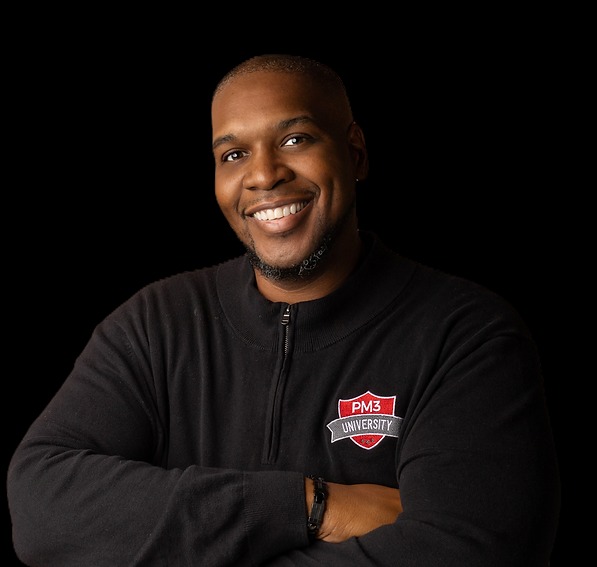
By Willie Finklin, CFRE, The Grant GOAT
For many nonprofit leaders, receiving that first grant feels like crossing a finish line. It's the moment they believe their organization has finally earned credibility and the resources needed to make a greater impact.
While I understand that excitement, I often remind founders that the first grant isn't the finish line.
It's the beginning.
One of the biggest misconceptions in the nonprofit world is that writing a compelling proposal is all it takes to secure funding. If that were true, thousands more organizations would receive grants every year. The reality is that many nonprofits begin searching for grants long before they're ready to compete for them.
I've worked with organizations that had outstanding missions but lacked the organizational structure funders expect. I've also seen smaller nonprofits with limited budgets secure grants because they had invested time in preparing their organization before submitting a single application.
The difference wasn't passion.
It was preparation.
If your nonprofit is getting ready to pursue its first grant, don't focus solely on writing the proposal. Focus on becoming the kind of organization funders want to invest in.
Stop Thinking About the Grant Before You Think About the Organization
One of the first questions I ask nonprofit leaders is simple.
"Why do you want a grant?"
Most people answer by describing the programs they want to launch or the people they hope to serve. Those are important goals, but they're only part of the conversation.
Before a funder invests in your project, they're investing in your organization. They want to know whether your nonprofit has the leadership, governance, financial systems, and operational capacity to manage the award responsibly. A grant proposal isn't just asking for money. It's demonstrating that your organization is prepared to steward those resources wisely.
If your nonprofit isn't ready internally, even the strongest proposal may struggle to compete.
Your Mission Gets Their Attention, But Your Readiness Earns Their Trust
Every nonprofit believes its mission is important, and many of them are absolutely right. Communities face significant challenges, and organizations are working every day to meet those needs.
The challenge is that funders receive far more requests than they can possibly support. Because of that, they have to make difficult decisions about where their investments will have the greatest impact.
That's where organizational readiness becomes so important.
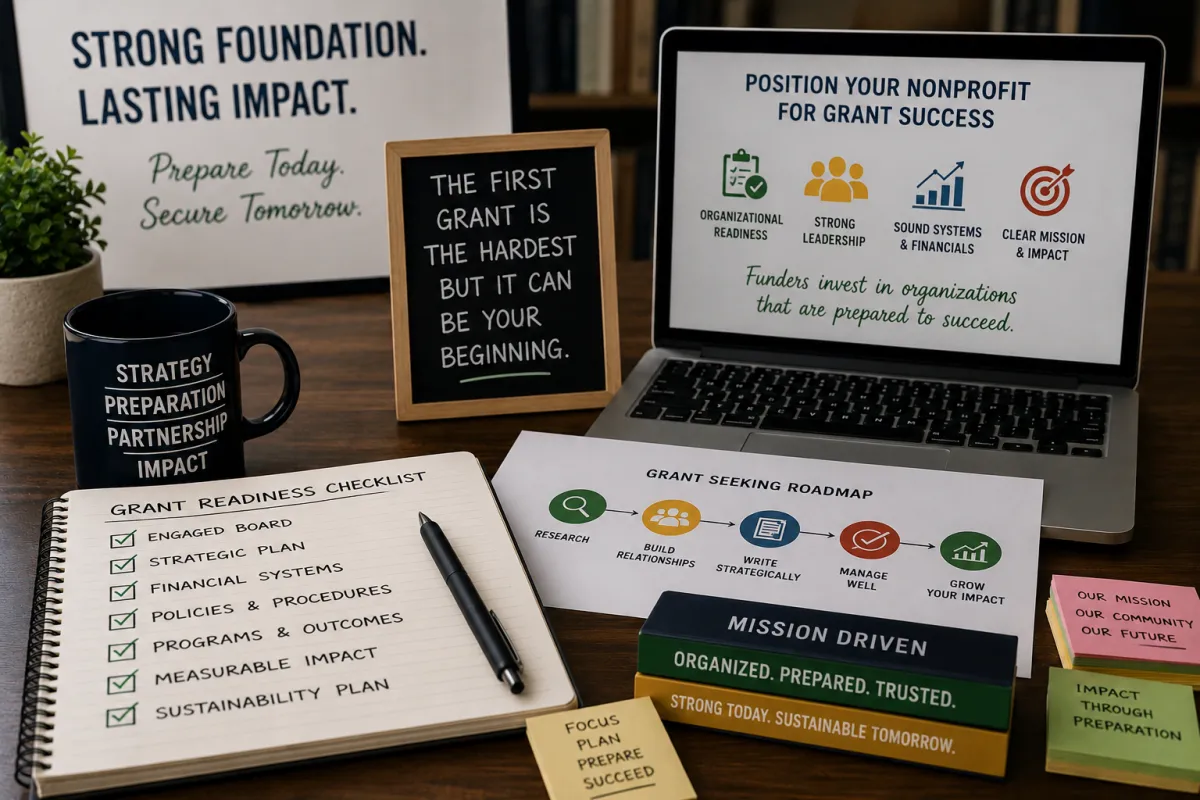
Funders look for evidence that your nonprofit is prepared to manage funding successfully. They want to see an engaged board, sound financial practices, realistic budgets, measurable outcomes, and a clear plan for implementation. These factors help reduce risk and increase confidence that the grant dollars will produce meaningful results.
A compelling mission opens the door.
Organizational readiness helps keep it open.
Relationships Matter More Than Most People Realize
One of the biggest myths about grant writing is that funding decisions are based entirely on the application.
While your proposal certainly matters, successful grant seeking often begins long before the application is submitted.
Many foundations encourage nonprofits to introduce themselves before applying. They appreciate organizations that take time to understand the funder's priorities, ask thoughtful questions, and determine whether there's a genuine alignment between the organization's mission and the foundation's goals.
Grant funding isn't simply a financial transaction.
It's the beginning of a partnership.
Building relationships with funders demonstrates professionalism and allows both parties to determine whether they're a good fit before investing significant time in the application process.
Don't Chase Every Grant You Find
It's understandable to become excited when you discover a funding opportunity, especially if your organization is still growing. However, one of the fastest ways to waste valuable time is by applying for grants that aren't a good match.
Successful nonprofits are selective.
Rather than asking, "Can we apply?" they ask, "Should we apply?"
The strongest grant applications are submitted by organizations whose mission, programs, geographic service area, and funding needs closely align with the priorities of the grantmaker. When there's a natural fit, your proposal becomes much stronger because you're responding to exactly what the funder is looking to support.
Submitting fewer, higher-quality applications often produces better results than submitting dozens of proposals with little strategic alignment.
Your First Grant Is About Building Credibility
Every grant your nonprofit receives becomes part of your organization's track record.
That first award demonstrates that another organization believed in your mission and trusted your leadership. It provides an opportunity to establish a history of responsible financial management, timely reporting, measurable outcomes, and successful project implementation.
This is one reason why smaller grants shouldn't be overlooked.
Many nonprofit leaders become discouraged because they aren't immediately awarded six-figure grants. In reality, many successful organizations began with much smaller awards that allowed them to demonstrate their effectiveness over time.
Each successful grant strengthens your credibility and positions your organization for larger opportunities in the future.
Winning the Grant Is Only the Beginning
Receiving the award is exciting, but it's also where your real responsibility begins.
Grant management requires careful financial oversight, accurate recordkeeping, timely reporting, and ongoing communication with the funder. Organizations that manage grants well often develop long-term relationships that lead to future funding opportunities.
On the other hand, organizations that fail to meet reporting requirements or struggle to manage grant funds may find it much more difficult to secure future support.
Winning a grant is an accomplishment.
Managing it well is what builds your reputation.
Final Thoughts: Preparation Creates Opportunity
Every nonprofit dreams of receiving that first grant, but successful organizations understand that funding doesn't begin with writing.
It begins with preparation.
The strongest grant proposals come from organizations that have invested time in building leadership, strengthening governance, developing financial systems, measuring outcomes, and clearly defining their programs. These investments don't guarantee funding, but they dramatically improve your organization's ability to compete.
If your nonprofit is preparing to pursue its first grant, don't rush the process. Take the time to build a strong foundation before you begin writing. The effort you invest today will not only strengthen your proposal, but it will also position your organization for long-term success.
At PM3 University, we believe grant readiness is about much more than completing an application. It's about building organizations that funders trust and communities depend on. When you prepare your organization before pursuing funding, you're not simply increasing your chances of winning a grant. You're creating the foundation for sustainable impact that will serve your mission for years to come.