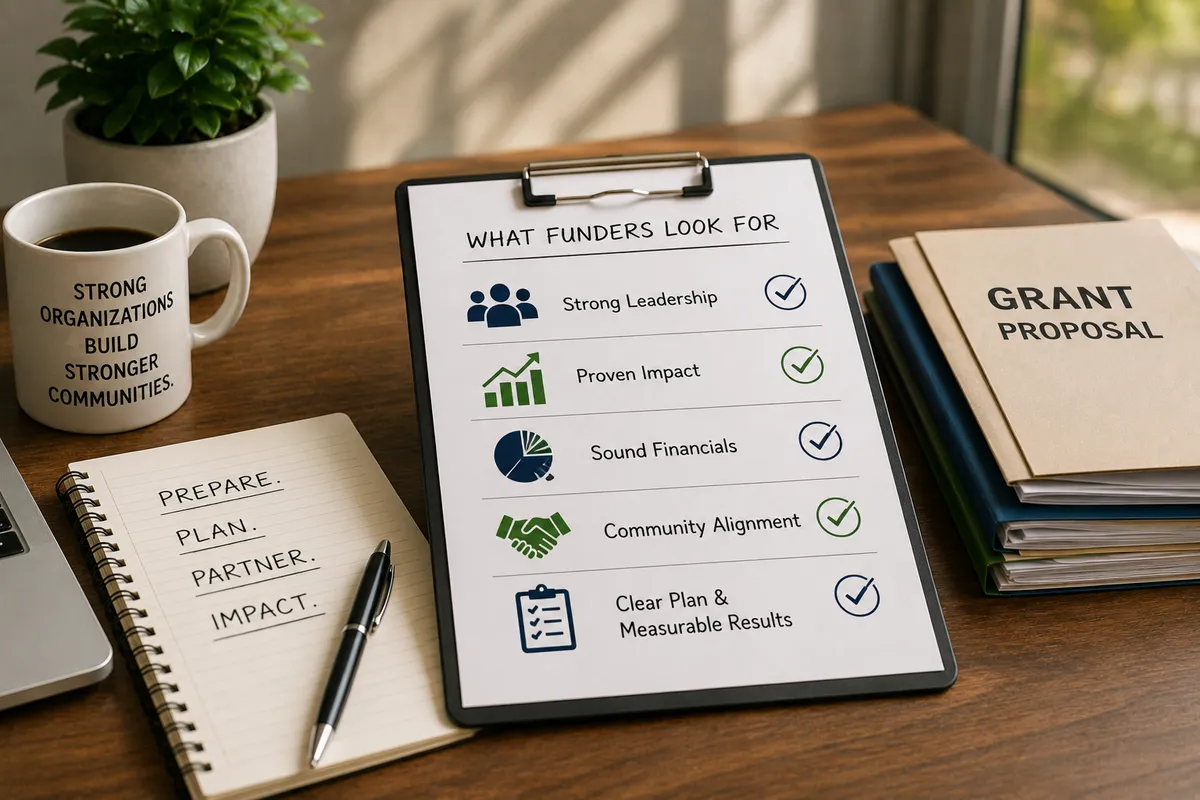
The Funder's Perspective: What They're Looking For Before They Read Your Proposal
The Funder's Perspective: What They're Looking For Before They Read Your Proposal
By Willie Finklin, CFRE, The Grant GOAT
If you've ever submitted a grant proposal and received a rejection letter, you're not alone.
Every year, nonprofits invest countless hours researching funding opportunities, writing proposals, developing budgets, and gathering supporting documents, only to receive a polite email thanking them for their submission and informing them that another organization was selected.
It's frustrating.
Naturally, many nonprofit leaders assume the proposal wasn't written well enough or that the organization simply wasn't lucky this time.
Sometimes that's true.
But more often than not, the decision begins long before a reviewer reaches the first paragraph of your proposal.
One of the biggest misconceptions about grant writing is that funding decisions are based solely on the quality of the narrative. While a well-written proposal certainly matters, grantmakers evaluate much more than your ability to tell a compelling story. Before they become excited about your mission, they're looking for signs that your organization is capable of delivering what it promises.
Understanding how funders think can completely change the way you approach grant writing. Instead of trying to convince someone to believe in your mission, you begin demonstrating why your organization is prepared to turn that mission into measurable results.
Let's step into the funder's shoes and explore what they're really looking for before they ever begin reading your proposal.
They're Looking for Organizational Readiness, Not Just a Great Idea
Every grantmaker receives applications from organizations addressing important community needs. Whether it's education, housing, healthcare, workforce development, or youth services, most applicants have worthy missions and passionate leaders.
That means your mission alone isn't what sets you apart.
Funders first want to know whether your organization is prepared to manage their investment responsibly. They look for evidence of strong leadership, sound financial management, effective governance, and operational stability. They want confidence that your nonprofit has the capacity to carry out the project exactly as described.
This is why organizational readiness matters so much. A nonprofit with a well-developed infrastructure often has a significant advantage over an organization with a compelling idea but limited systems. Grantmakers aren't simply funding programs, they're investing in organizations capable of producing results.
They Want Confidence, Not Perfection
Many nonprofit leaders spend weeks trying to write the perfect proposal, believing every sentence must be flawless.
While clarity and professionalism are important, funders aren't expecting perfection.
They're looking for confidence.
Confidence comes from seeing a realistic budget that aligns with the proposed activities. It comes from measurable outcomes that demonstrate thoughtful planning. It comes from financial statements that reflect responsible stewardship and leadership teams that understand the communities they serve.
A proposal that acknowledges challenges while presenting a realistic plan often builds more trust than one that promises extraordinary results without explaining how those results will be achieved.
Funders understand that nonprofit work is complex. What they want to know is whether your organization has the experience, planning, and commitment necessary to navigate that complexity successfully.
They're Evaluating Risk Just as Much as Opportunity
Every grant represents an investment, and with every investment comes risk.
From a funder's perspective, one of the biggest questions isn't simply whether your program deserves funding. It's whether your organization can successfully manage the funds while delivering the promised outcomes.
That's why grantmakers often review far more than your proposal narrative. They examine your financial statements, board leadership, organizational history, previous grant performance, IRS status, and sometimes even your website and social media presence.
They're asking questions such as:
Does this organization appear stable?
Can it manage the size of this award?
Has it demonstrated accountability in the past?
Will it represent our foundation well?
These questions may never appear on the application, but they're often part of the review process.
Reducing perceived risk increases your chances of receiving funding.
They Want to See Alignment, Not Reinvention
One mistake many nonprofits make is trying to reshape their programs to fit every grant opportunity they discover.
Funders recognize when an organization is stretching its mission simply to qualify for funding.
Strong proposals don't force a connection.
They demonstrate a natural alignment between the nonprofit's mission and the funder's priorities.
When your organization's work already reflects the values and objectives of the grantmaker, your proposal becomes much more authentic. Reviewers can immediately see why your project belongs within their funding portfolio.
Remember, not every grant is meant for your organization.
The goal isn't to apply for every opportunity.
The goal is to apply for the right opportunities.
They Want Evidence That You Measure Success
Funders certainly appreciate inspiring stories, but stories alone aren't enough.
They also want evidence.
How will you know your program succeeded?
What outcomes will you measure?
How many people will benefit?
What changes do you expect to see?
How will you collect and report the data?
Organizations that can clearly answer these questions demonstrate maturity and accountability. They understand that impact isn't measured by good intentions but by meaningful, measurable results.
Evaluation doesn't have to be complicated, but it does have to be intentional. Funders want to know that you're learning from your work and using data to improve your programs over time.
They Want a Partner, Not Just an Applicant
Perhaps one of the most overlooked aspects of grant funding is that foundations aren't simply awarding money.
They're building relationships.
Most grantmakers hope to support organizations that share their vision and demonstrate long-term potential. They want partners who communicate openly, manage funds responsibly, submit reports on time, and remain committed to achieving meaningful outcomes.
Receiving one grant often creates opportunities for future funding, but only if the relationship is managed well.
That's why professionalism matters long after the award is announced. Every interaction with a funder contributes to your organization's reputation and credibility.
Think beyond the application.
Think about the partnership.
Write for the Reviewer, Not Just the Organization
One of the best pieces of grant writing advice I can offer is this: stop looking at your proposal only through your own eyes.
Look at it through the eyes of the person reviewing it.
Ask yourself whether your proposal demonstrates organizational readiness, financial responsibility, measurable outcomes, and a realistic plan for success. Consider whether you've given the reviewer confidence that your nonprofit can deliver on every promise you've made.
When you begin writing with the funder's perspective in mind, your proposals become stronger because they're answering the questions reviewers are already asking.
At PM3 University, we believe successful grant writing begins long before the proposal is written. It starts with building organizations that are prepared, accountable, and ready to earn the trust of funders. When your nonprofit demonstrates readiness before asking for funding, your proposal becomes much more than a request for money. It becomes an invitation for funders to invest in lasting community impact.