Nonprofit Isn’t a Hustle: How to Build Infrastructure Before Impact
Nonprofit Isn’t a Hustle: How to Build Infrastructure Before Impact
By Willie Finklin, CFRE, The Grant GOAT
Somewhere along the way, the culture of hustle made its way into the nonprofit world. You’ve seen founders working around the clock, juggling 12 roles, surviving on passion and coffee, pushing to make an impact with no real structure behind it.
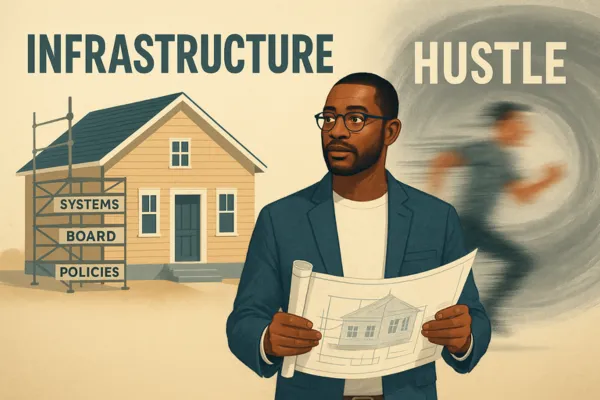
But here’s the truth: nonprofit work isn’t a hustle, it's a build.
You can’t sustain purpose-driven work on effort alone. You need systems. You need infrastructure. You need a foundation that allows you to grow without breaking under the weight of your own mission.
Let’s talk about what that looks like.
Stop Operating Like You’re the Only One Who Cares
When you start a nonprofit, it’s easy to fall into the “if I don’t do it, it won’t get done” mindset. But that’s not leadership, it's exhaustion.
True impact comes from building systems that allow others to carry the vision forward. You can’t scale a mission if everything depends on you.
What to do instead:
Delegate early and clearly.
Document your processes.
Train people to lead, not just to help.
A sustainable nonprofit isn’t built around one person’s energy. It is built around a shared framework.
Build Before You Broadcast
Social media loves quick wins, launch days, grand openings, and ribbon cuttings. But before you start posting about your nonprofit’s impact, make sure you’ve built the internal systems to support it.
Because what funders, partners, and donors really want to see isn’t activity, it is capacity.
Before you go public, ask:
Do we have bylaws and policies in place?
Is our board trained and active?
Can we manage and report funds accurately?
Do we have measurable programs ready to implement?
When you build before you broadcast, your story will not only inspire, it will stand up to scrutiny.
Impact Without Infrastructure Is Unsustainable
A lot of founders launch programs before they’ve built the back-end structure to sustain them. That’s how burnout, turnover, and chaos begin.
Your infrastructure is what makes your impact repeatable. It is the invisible work that supports the visible mission.
That includes:
Financial systems and budgeting tools
Policies for governance and accountability
HR practices, even if you’re small
Technology and data tracking systems
These aren’t “extras.” They are the difference between doing good work once and being able to do it again and again.
Funders Invest in Stability, Not Struggle
Funders don’t want to save your organization, they want to strengthen it. When they review proposals, they’re not just asking if your mission matters. They’re asking, Can this organization deliver?
That means they’re looking at your systems: your leadership, your financials, your reporting structure.
If your nonprofit runs like a hustle, you might earn admiration but not investment. Funders look for readiness, reliability, and structure.
Leadership Isn’t Doing Everything, It’s Building What Outlasts You
Your job as a founder is not to be the hardest worker. It is to create the systems, people, and processes that make your mission possible when you’re not in the room.
Every founder faces a moment when they realize they’re running at full speed but not moving forward. That’s when you know it’s time to stop hustling and start building.
Ask yourself:
Can my organization function without me for 30 days?
Are roles and responsibilities clearly defined?
Are we reacting or are we planning ahead?
If the answer is no, that’s your sign. It’s not failure, it is feedback.
Final Thoughts: Build the House Before You Turn on the Lights
You don’t build impact by running faster. You build it by slowing down long enough to put the structure in place.
A nonprofit that’s built to last has clarity, systems, and strategy. It is not powered by hustle, it is powered by preparation.
So before you try to change the world, take time to build something that can hold the weight of your calling.
At PM3 University, we help founders build the infrastructure that supports their vision because real impact doesn’t happen by accident. It happens by design.