The Nonprofit Growth Ceiling: What's Holding Your Organization Back?
The Nonprofit Growth Ceiling: What's Holding Your Organization Back?
By Willie Finklin, CFRE, The Grant GOAT
Every nonprofit wants to grow.
Whether it's serving more families, expanding programs, hiring additional staff, opening new locations, or securing larger grants, growth is often viewed as the natural next step. After all, if you're making a difference, shouldn't you want to make an even bigger difference?
The answer is yes, but growth isn't automatic.
Over the years, I've worked with organizations that had dedicated leaders, passionate volunteers, supportive communities, and even a consistent stream of funding. On paper, they looked like they were doing everything right. Yet year after year, they remained in the same place. Their impact plateaued, their fundraising stalled, and their leaders became increasingly frustrated.
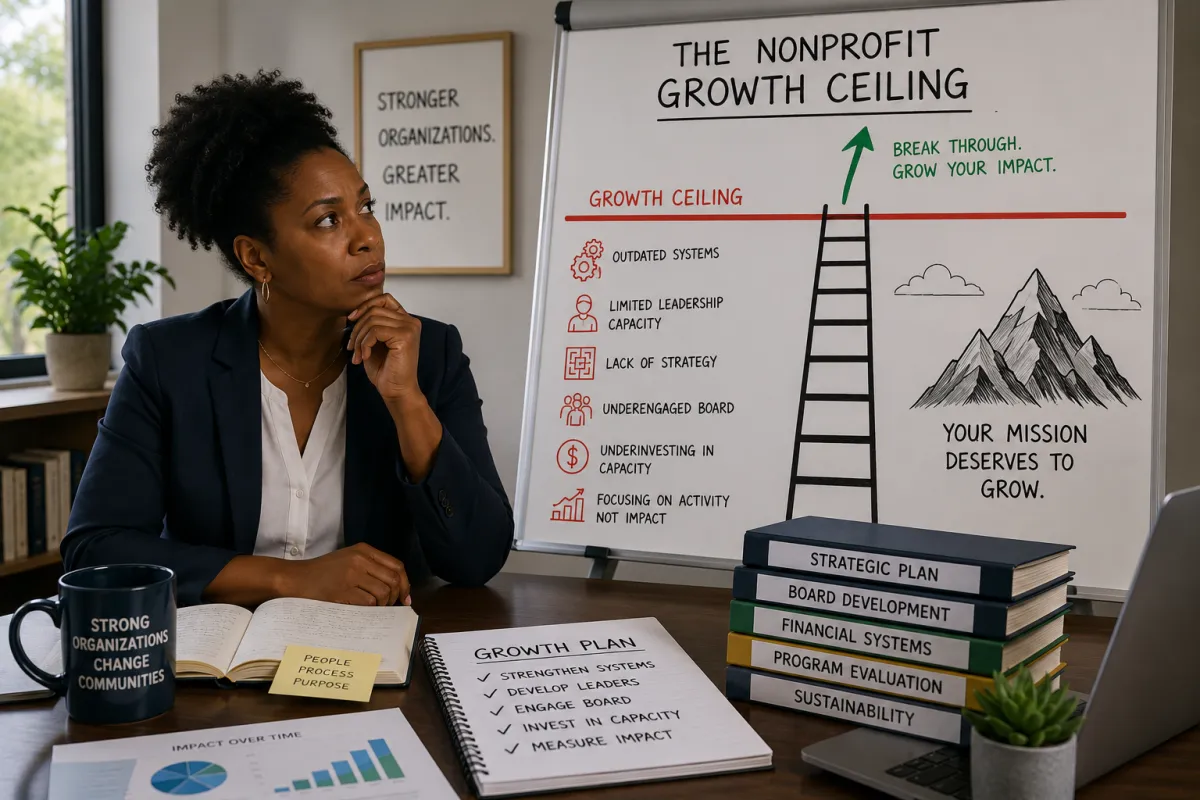
What they had encountered was something I call the nonprofit growth ceiling.
Every organization reaches a point where the strategies that helped it get started are no longer enough to move it forward. Breaking through that ceiling doesn't happen by working longer hours or applying for more grants. It happens when nonprofit leaders recognize what's holding the organization back and intentionally invest in building the capacity needed for the next stage of growth.
Let's take a closer look at some of the most common barriers that prevent nonprofits from reaching their full potential.
1. Your Systems Have Stopped Growing with Your Organization
When most nonprofits begin, simple systems are often enough. A spreadsheet tracks donations, volunteers communicate through group texts, and one person manages nearly every administrative responsibility. For a small organization, those methods may work just fine.
The challenge comes when the organization begins to grow but the systems never evolve. More donors require better tracking. More volunteers require stronger communication. Larger grants demand detailed financial reporting. What once felt manageable suddenly becomes overwhelming, and leaders spend more time solving operational problems than advancing the mission.
Growth requires systems that can support it. Investing in donor management software, financial processes, project management tools, and documented procedures may not seem as exciting as launching a new program, but these investments create the stability necessary for long-term success. Organizations that strengthen their infrastructure before they outgrow it are far better prepared when new opportunities arise.
2. Leadership Hasn't Evolved with the Organization
Starting a nonprofit requires determination, resilience, and a willingness to do just about everything yourself. Most founders wear multiple hats because they have no other choice. They write grants, recruit volunteers, manage programs, oversee finances, and respond to emails, often all in the same day.
Eventually, however, that approach becomes the organization's greatest limitation.
As nonprofits grow, leadership must change. Instead of personally handling every task, leaders must learn to delegate responsibilities, develop staff, empower board members, and focus on strategic decision-making. This transition can be uncomfortable because many founders equate delegation with losing control. In reality, delegation creates capacity.
An organization cannot continue growing if every decision depends on one person. Strong leadership isn't about doing more. It's about building a team capable of accomplishing more together.
3. You're Reacting to Opportunities Instead of Following a Strategy
Many nonprofits fall into the trap of saying yes to every opportunity that comes their way. A grant becomes available, so they create a new program. A potential partner approaches them, so they expand their services. Another funding opportunity appears, and suddenly they're pursuing work that wasn't part of their original vision.
While each opportunity may seem worthwhile on its own, together they can pull an organization in too many directions.
Successful nonprofits grow with intention. They have a strategic plan that guides their decisions and keeps the organization focused on its mission. Rather than allowing funding opportunities to dictate their future, they evaluate every opportunity by asking a simple question: Does this move us closer to our mission and long-term goals?
Sometimes the healthiest decision a nonprofit can make is declining an opportunity that doesn't align with its strategy. Sustainable growth comes from focus, not from trying to do everything.
4. Your Board Is Present, But Not Fully Engaged
An effective board does far more than attend quarterly meetings and approve reports. Board members should provide governance, strengthen accountability, open doors to new partnerships, support fundraising efforts, and offer strategic guidance that helps move the organization forward.
Unfortunately, many nonprofit boards become passive. Meetings focus on reviewing updates rather than discussing long-term strategy, evaluating organizational risks, or planning for future growth. As a result, executive directors often carry the weight of every major decision while the board remains underutilized.
A highly engaged board expands an organization's capacity in ways that staff alone cannot. Their experience, professional networks, and diverse perspectives help nonprofits navigate challenges, identify opportunities, and make stronger decisions. When leadership and governance work together effectively, organizations are far better equipped to break through periods of stagnation.
5. You're Treating Capacity Building as an Expense Instead of an Investment
One of the most common misconceptions in the nonprofit sector is that every available dollar should go directly into programs. While serving the community will always remain the priority, organizations also need to invest in themselves if they expect to grow.
Capacity building includes strengthening leadership, improving technology, training staff, developing policies, enhancing financial systems, and creating processes that improve efficiency. These investments may not produce immediate results, but they create the foundation that allows organizations to serve more people over time.
Funders understand this. Increasingly, grantmakers recognize that healthy organizations require strong infrastructure. A nonprofit with capable leadership, reliable financial systems, and effective operations is far more likely to deliver meaningful outcomes than one operating entirely on passion and good intentions.
Capacity building isn't taking resources away from your mission. It's strengthening your ability to fulfill it.
6. You're Measuring Activity Instead of Impact
Many nonprofits proudly report the number of workshops they hosted, meals they served, volunteers they recruited, or events they organized. While those numbers are important, they don't always answer the question funders care about most.
What changed because of your work?
Did graduation rates improve? Did families achieve stable housing? Did participants gain employment? Did health outcomes improve? These are the types of results that demonstrate meaningful impact.
Organizations that consistently measure outcomes are better positioned to improve their programs, communicate their value, and secure future funding. Data isn't simply about satisfying grant requirements. It's about understanding whether your efforts are truly making a difference.
When nonprofits shift their focus from measuring activity to measuring impact, they become stronger decision-makers and more effective stewards of the resources entrusted to them.
Final Thoughts: Growth Requires More Than Hard Work
Every nonprofit eventually reaches a season where growth slows. That doesn't mean the mission has become less important or that the organization has failed. More often, it's an indication that the nonprofit has reached a point where new strategies, stronger systems, and greater organizational capacity are needed.
If your organization feels stuck, resist the temptation to simply work harder. Instead, take an honest look at what's creating the ceiling. Is it your leadership? Your systems? Your board? Your strategic direction? Or perhaps your willingness to invest in the infrastructure that supports long-term success?
The good news is that every growth ceiling can be broken. Organizations that intentionally strengthen their leadership, improve their operations, invest in capacity building, and remain focused on their mission are the ones that continue serving their communities for decades.
At PM3 University, we believe nonprofit growth isn't measured by the size of your budget or the number of people on your staff. It's measured by your ability to build an organization that creates lasting, sustainable impact. When you invest in strengthening your organization, you're also investing in every life your mission has the power to change.